Color
A puma’s color can range from grizzled gray to dark brown. They can also be a light brown-ish orange or cinnamon color.

Majestic. Powerful. Critical. Pumas are often feared, but they are truly beautiful creatures. Not only are they incredible, powerful animals, but they play an important role in our ecosystem.
A puma’s color can range from grizzled gray to dark brown. They can also be a light brown-ish orange or cinnamon color.
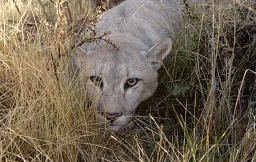
'El Blanco', named for his white coat. Part of the Patagonia Puma Project.
Did you know a puma sounds like a house cat? They do not have the part of the larynx that allows them to roar, so they chirp, whistle, growl, hiss, and “scream”.
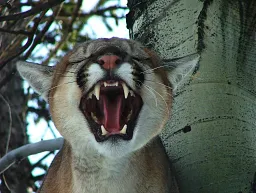
Female pumas weigh between 70 and 145 pounds. Male pumas weigh between 80 and 200 (or more!) pounds.
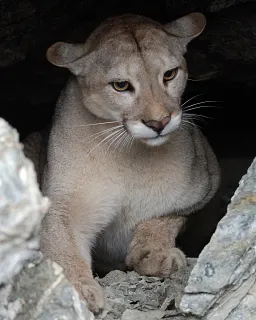
From snout to tail, pumas average 5 to 9 feet. Their tail is an important part of their body that helps them balance and is roughly 40% of their body length.
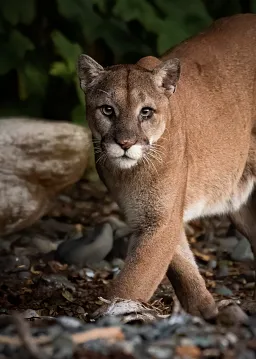
A mountain lion (puma concolor) spotted near the north end of Vancouver Island, BC, Canada. Photo courtesy of and copyright Jarrett Lindal of Jarrett Lindal Media. All rights reserved.
Pumas have very long and powerful back legs that allow them to jump well. They can jump about 22 feet vertically. They can also jump an average of 20 to 30 feet horizontally.
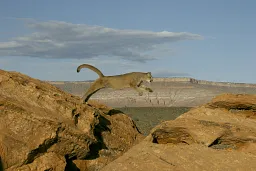
Photo of jumping puma courtesy of and copyright Shelley Alger.
Pumas are carnivores, so they only eat meat. They’ll eat just about any animal, as they are a generalist predator. But deer make up an average of 60-80% of their diet in North America. An adult male needs about 6,000 calories a day, which is roughly 1 deer a week.
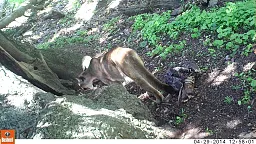
Female pumas can start reproducing at 2 years old. From there, they’ll be pregnant or raising babies for about 75% of their lives. When not mating or with a cub, pumas live and hunt alone.
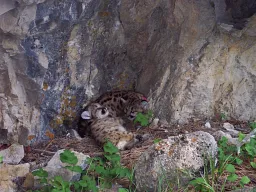
In the wild, pumas can live 6 to 13 years. On average, they live shorter lifespans. In captivity, though, they can live upwards of 15 years.
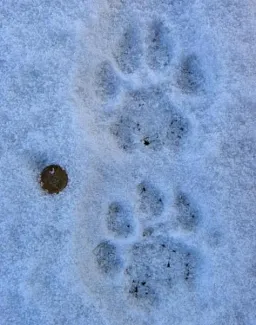
Puma Tracks in the Snow
Pumas have the largest home range of any land mammal, which means they travel a lot. A female has a home range of 40 to 80 square miles. A male has a home range of 100 to 200 square miles!
Do they ever overlap? Sometimes! Males will never willingly overlap and can fight to the death over it. Females will sometimes overlap, although they don’t interact a lot. For mating purposes, one male will overlap with several females’ ranges.
While BAPP focuses on pumas in the Bay Area, as a whole, this species can be found from Canada all the way to South America. They live in areas from sea level to over 14,000 feet in elevation. They also inhabit many ecoregions and habitats.
Historically, Native Americans offered pumas reverence and respect. They recognize the importance of them and their power! Unfortunately, European settlers feared them and that fear continues today. They can no longer be found in the eastern half of North America and parts of South America.
So where do we see them today? For one, in the Bay area! That is one of the reasons it is so important to preserve them here. To encourage peaceful preservation, we track local sightings and keep them publicly available.
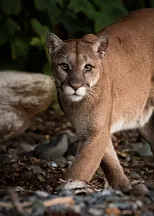
A mountain lion (puma concolor) spotted near the north end of Vancouver Island, BC, Canada. Photo courtesy of and copyright Jarrett Lindal of Jarrett Lindal Media. All rights reserved.

 Commonly used name(s)
 Uncommon or historical name(s)
 Name(s) given by Native Americans
Sneak-Cat : Uncommon or historical name
This name originated from the Canadian Northwest.
Poltroon Tiger : Uncommon or historical name
This name originated in Canada in 1771. Meaning poltroon or cowardly, the puma was known to live as peacefully as a dog with a keeper of wild beasts.
Indian Devil : Uncommon or historical name
This name was given by the backwoods settlers in Eastern Canada. From this, the variation Injun Devil was derived.
Carcajou/Quinquajou : Uncommon or historical name
This is a name given by French traveler Pierre Francois Xavier de Charlevoix in 1744. However, these names are French-Canadian for the wolverine and are mistakes in identity.
Fire Cat : Name given by Native Americans
Native Americans of the Puget Sound in the state of Washington believed that in the Fall season of each year, this great cat carried fire from the Olympic Mountains to Mount Rainier, starting a forest fire along the way.
Ghost Walker : Uncommon or historical name
This name originated in the Selkirk Mountains of British Columbia.
Katalgar : Name given by Native Americans
This is the name given by the Cree/Creek Indians, meaning Greatest of Wild Hunters.
Pi-Twal/Pi-Tawl : Name given by Native Americans
Name given by the New Brunswick Malecite Native Americans at St. Johns River, meaning the Long-Tailed One.
Cougar : Commonly used name
This is one of the most popular names for the puma, most commonly used in Canada and the Pacific Northwest. It is derived from the name Cuguacuarana, related to Sassuarana - the Tupi name for puma in the lower Amazon basin, meaning False Deer.
Purple Panther : Uncommon or historical name
This name was given to the puma by James Copen (Grizzly) Adams.
Shunta-Haska/Shunta-Haschka : Name given by Native Americans
This name was given by the Mandans, a division of the Sioux Nation, meaning long tail.
Catamount : Commonly used name
Most commonly used in New England, the catamount is the symbol of the state of Vermont and is prominent in local folklore. This name was recorded in 1794 by Samuel Williams, the first Historian of Vermont. The name is an acronym for cat-of-the-mountain and is synonymous with the Spanish gato-monte or catus mountainus. The variation catermount has been transcribed in the Yankee diction of the time. Another variation is catawampus, which was common with frontier folks.
Dos-lotch : Name given by Native Americans
This is the Klamath Indian name for the puma.
Rocky Mountain Lion : Uncommon or historical name
Erielhonan : Name given by Native Americans
From the Lake Erie Native Americans, meaning long tail.
California Lion : Uncommon or historical name
Mountain Lion : Commonly used name
This is one of the most common names for the puma. It is most commonly used in the Southwestern United States and in the Rocky Mountain region. The name originates from the belief in early American times that the puma was a lion living in the mountains. The name lion was first applied by Christopher Columbus in 1502 because it resembled a young lioness in the Old World in shape and color. No other name appeared in literature until 1609, when Garcilasso de la Vega, the Inca, recorded the name Puma for this cat.
Mountain Tiger : Uncommon or historical name
Recorded in the early Ohio country in 1838.
Bender : Uncommon or historical name
Name for the puma among the Pennsylvanian Germans.
Gray Tiger : Uncommon or historical name
Recorded in 1744 from the Iroquois Country where the writer found tigers of a grayish color, but not spotted.
Tiger : Uncommon or historical name
Recorded in 1770, this name was given to the puma in the present New York state and old New Netherlands, in addition to in the Okefenokee Swamp region at the Georgia-Florida line and in Florida during the Seminole Wars. This name was applied by early travelers to all spotted felines (puma kittens are spotted for camouflage). French Naturalist Comte de Buffon said the error began in Europe and was transported to America, where it was doubly augmented.
Chimbica : Name given by Native Americans
Recorded in 1789, this is the name from Cochimi of lower California.
Gray Lion : Uncommon or historical name
This name originated from the 1540 Coronado expedition in the Southwest.
Yuma Puma : Uncommon or historical name
A name for the puma in Arizona.
Father of the Game : Name given by Native Americans
Name originating from the Zuni Indians.
Long Tail : Name given by Native Americans
Name originating from the Zuni Indians of New Mexico and Arizona. The Zuni Indians considered this cat the hunter god. In addition, the Navajo Indians characterized the puma as Walking Silently Among the Rocks.
Ko-Licto/Ko-Ishto : Name given by Native Americans
This name was given by the Chickasaw Indians, meaning Cat of God.
Catsa : Name given by Native Americans
This name was given by the Muskogee Indians in the Southeast United States.
Painter : Commonly used name
Originally given by backwoodsmen, the name Panther became painter, a corruption, in the phraseology of the Anglo-American hunters, fur traders, and cowboys. This name is most commonly used in the Eastern United States.
Leopard : Uncommon or historical name
William Byrd, Virginia Planter and Surveyor, wrote that the Spanish complimented the puma with the name leopard. The name leopardo was used in many localities in Mexico until recently.
Tigre : Uncommon or historical name
This was a common name for the puma in the vast Louisiana country.
Eastern Cougar : Uncommon or historical name
Panther : Commonly used name
A common name in states east of the Mississippi River, this name was originally another name for the Leopard in the Old World. It was recorded in Virginia in 1705 by a colonist and also in 1709 in the Carolinas. Panther is derived from the Greek panther. Currently, it is most commonly used in the Eastern and Southern states.
Painther : Uncommon or historical name
This name was recorded by William Gilmore Simms, a writer of Southern border romances, in the Balsam Range of the North Carolina Mountains.
Tyger : Uncommon or historical name
This name was used in the Carolinas and Southern States as early as 1680.
Klandagi/Klandaghi : Name given by Native Americans
The name given by the Cherokee Indians, meaning Lord of the Forest.
Swamp Devil and other Florida folk names : Uncommon or historical name
Florida folk names for the puma:
The reference to screamer or crier refer to the eerie sound a female mountain lion makes when she is in estrus and looking for a mate.
Florida Panther : Commonly used name
This is the common name for the endangered sub-species of the puma in Florida.
Mexican Lion : Uncommon or historical name
Mitzli : Name given by Native Americans
Mexican Aztec name meaning the killer.
Red Lion : Uncommon or historical name
In Guatemala and Belize.
Ah Coh/Cabcoh : Name given by Native Americans
This is the Mayan name from Guatemala and the Honduras as a reference to the red coloration of the puma in this area.
Leon/Leon Americano : Uncommon or historical name
This name was given by the Spanish and Argentines from the earliest times in America. It was also recorded by Amerigo Vespucci in 1500 on the beaches of Nicaragua.
Kwiarra-arua-te : Name given by Native Americans
This is the name given by the Arawak Indians in the West Indies. It means deer tiger.
Leon Bayo : Uncommon or historical name
Meaning Bay Lion, this name is used in Uruguay, Venezuela, and Colombia, due to its reddish-brown coat in those regions.
Deer Tiger : Uncommon or historical name
Used in Guyana, this name was given to the puma on account of its resemblance to the deer in color.
Crushara-din : Name given by Native Americans
Meaning Deer Cat, this is the name given by the Wapishana Indians of Southern Guyana for the red variety of puma.
Red Tiger or Tigre Rouge : Uncommon or historical name
This name is used in parts of South America, owing to the uniform redness in the coat color.
Pampas-Cat : Uncommon or historical name
Certain parts of South America.
Sassuarana/Sussurana : Name given by Native Americans
The Tupi name for the puma, meaning False Deer.
Puma : Commonly used name
This name is most commonly used in South America and by scientists. It is Aymaran and Quechuan in origin, recorded in its original form. It is unaltered from the native pronunciation and original Spanish spelling. This is considered by many to be the one pure and unmistakable name.
Cuguacuarana : Name given by Native Americans
This is the Native Brazilian name for the puma.
Brazilian Cat : Uncommon or historical name
Silver Lion : Uncommon or historical name
Recorded in 1876 and still used in Brazil, this name refers to its coat color in that area. Mountain lion coat color varies according to the area and terrain it lives in.
Brazilian Puma : Uncommon or historical name
Aracho : Name given by Native Americans
This is the native name in the Argentine Province of Salta. In addition, the name Yagua-pita, meaning red jaguar, was given to the puma by the Quadrupedos of Paraguay. Similarly, the name Yagua Pyta was given to the yellow-red puma by the early Creoles in Paraguay, meaning red dog. Lastly, in this region, the name Yaguati, meaning white jaguar was given to the puma.
Guazuara : Name given by Native Americans
This is the name given to both the puma and jaguar by the Guarani Indians of Paraguay.
Onca Parda : Uncommon or historical name
Meaning brown ounce
Cadupani : Name given by Native Americans
From the Indian Warriors of the Argentine pampas, this name means Black Lion.
Pagi/Paggi/Paghi/Pangui/Trapial : Name given by Native Americans
Recorded in 1782 from the language of the Araucanian tribe in Central Chile.
Amigo Del Christiano : Uncommon or historical name
Meaning Friend of the Christians, this name was given to the puma by the gauchos of the Pampas for the gentle disposition of the cat towards man, for its passivity in the presence of man, and for anecdotes of its protectiveness of man on occasion.
Gol/Gool : Name given by Native Americans
This name originates from the Tall Tehuelche Indians of Patagonia. The Tehuelche also called the adult puma Goolen or Chaur and the puma kitten Cechine.
Argentine Puma : Uncommon or historical name
The puma is known by many names throughout the Americas! In the Southwest and Rocky Mountains, we know the puma as the mountain lion. In the Eastern United States, hunters coined it “painter”. In New England, the puma is called the catamount. In South America, though, it is most commonly referred to as “puma”. In Peruvian Quechua, “puma” means “powerful animal” - an apt descriptor!
In the Pacific Northwest, we know it as the cougar. This term comes from a French naturalist. In the 19th century, they combined two indigenous terms for the jaguar to form “cugur”. The jaguar’s habitats do overlap with the puma’s in some areas. Later, “cugur” became “cougar” - a common term today!
The puma has a very rich history with Native Americans, too. Many tribes had a name and lore about the puma. For example, the Zuni tribe of New Mexico and Arizona called pumas “Long Tail” and considered it the hunting god. The gauchos of the Pampas called it Amigo Del Cristiano, or “Friend of the Christians”. It earned this name through stories of protecting man and its constant passive nature. The Chickasaw people refer to the puma as “Ko-Icto,” which means “Cat of God”.
We often see this reverence for pumas in history. In the early 1900s, western author Zane Grey wrote about an incident that shows the respect for pumas. A Navajo guide refused to participate in a mountain lion hunt because killing one would be the same as killing a god.
For many tribes, the puma played a role in their everyday lives, too. Some Natives in California would not hunt them, even though they were pressured by Jesuit priests. It turns out that the leftovers from the pumas’ kills were an important food source for the tribe!
From sea to sea, the puma made an impression and earned itself dozens of names!
Pumas (or cougars) are not inherently aggressive. If you encounter a puma in the wild, there are steps you can take to make sure everything ends peacefully. There are also steps you can take to make your property less appealing to pumas and lower threats to your pets.
Do you consider pumas a threat to your family or pets? The good news is that pumas pose very little threat to human lives. If the right steps are taken, they also pose only a small threat to our pets and neighborhoods. We, however, pose a great threat to the puma.
Do you want to help preserve our local ecosystem for future generations? We need your help! Our volunteers are the lifeblood of our organization. We need all sorts of skills: from tech savvy folks to those willing to hike. If you want to be part of change, volunteer today!